Unfulfilled Yearnings with my Chinese Friends

Where the yearning ends, there the sprouting stops’ – self


Image

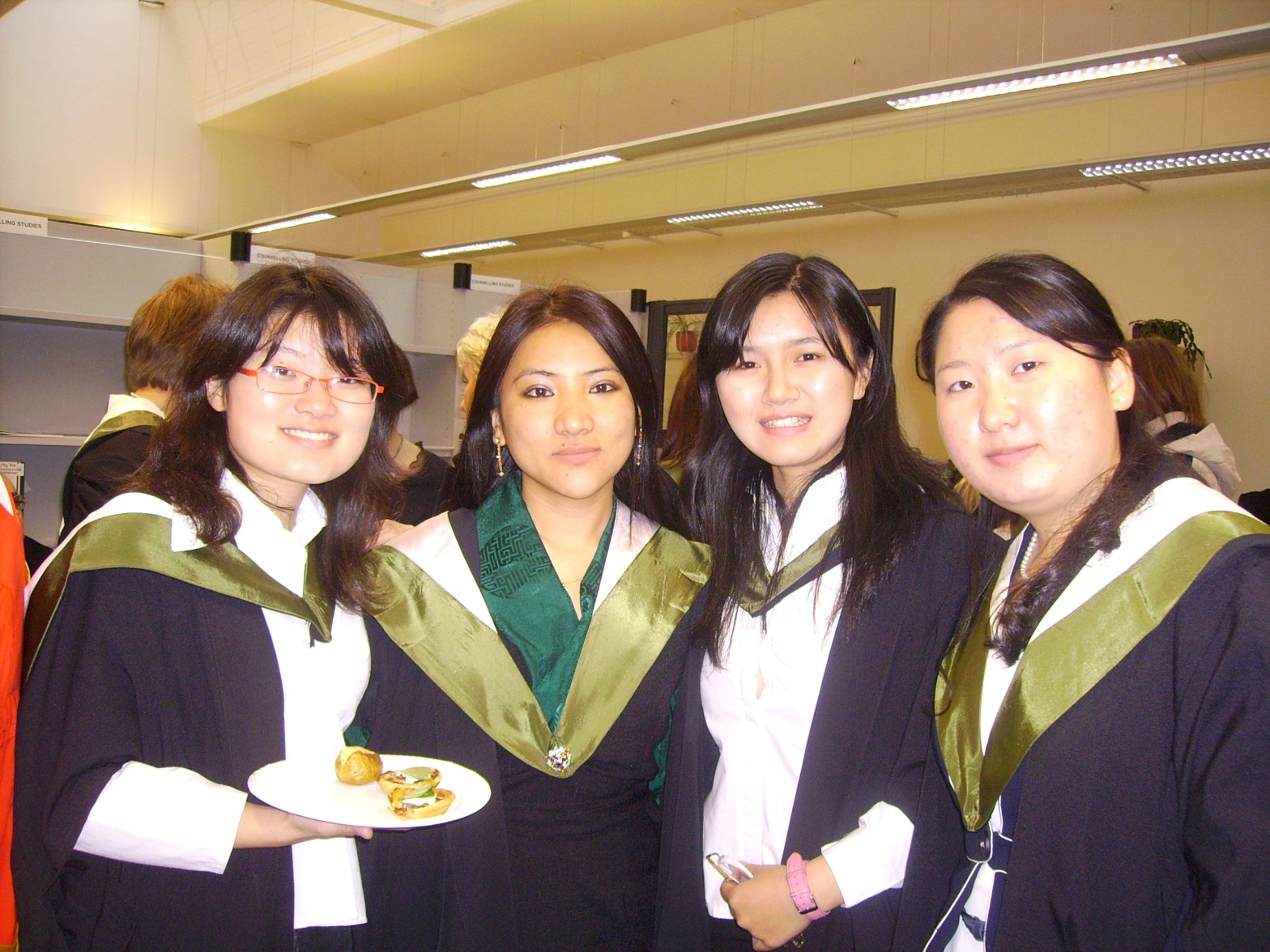
(Pictured are University  friends; they do not represent the three characters in the story)

the names of the Chinese friends are altered to respect their identity

The Year 2006 -07 was a touchstone year of sorts. It was the year I lived, studied, ate, partied, fought and explored life with Chinese students from mainland China..

The prestigious University of Edinburgh, listed in the top 50 universities in the world[1], had a ubiquitous presence of Chinese students on campus.

The Chinese were omnipresent; in the classroom, library, dome hallway, labyrinth, loo, canteen, Tesco and Lidl[2], at times their inescapable existence seeming inordinate and an  intrusion into my comfort zone.

I was taken by disbelief when I noticed their ability to smile at a face that seemed neither akin to their own nor that of the country their leaders have occupied. My first few sincere attempts to dissuade their amity and friendly overtures turned out to be of no avail as I grudgingly became an island adrift in their sea, having Chinese as classmates, flat-mates, study-mates, and work-mates.

What started as a detestable affair steadily turned into deep camaraderie and a very good friendship with three female Chinese students.

Four years thence, memories with the three friends are still crystal clear, still overpoweringly beautiful, and I remain yearning for the fulfillment of as yet unfulfilled yearnings.

Shin Jin (class-mate)

During the introduction round on the first day of the class, I observed a friendly demeanor in her, and sat next to her. She stamped her foot in vexation when three of our classmates – Machik Yen, Su Aaan and Jui Tiho – introduced themselves as Taiwanese nationals. I imagined her furor upon hearing me say with bolstered conviction that ‘I am a Tibetan and I belong to Tibet’. But it pleasantly surprised me to see no reaction from her end, until the very next moment when she made a discreet inquiry- “Where is Tibet?” On hearing my elucidation of the matter, she stared at me with incredulity and fretted about my refusal to call it ‘Xizang’. [3] For the rest of the week all she did was fizzle and flicker and her usually affable approach withered into nothingness.

Months flew by, assignments were submitted and returned, grades and credits accumulated and monsoon gave way to chilly winter and quick-paced university life; in the meantime all five of us – Machik Yen, Su Aaan and Jui Tiho from Taiwan, Shin Jin from Beijing and me ( Tibet) – bonded as thick friends.

On Shin Jin’s 25th birthday, she treated us to an arresting array of Chinese dishes at the city’s top Chinese restaurant. In the midst of capturing a picture perfect moment, tipsy Shin yelled in assertive jubilation —“you are all a part of me”- and faster than I could digest the food and her words, the four of us nixed the party. We walked back to our flats, whining about her and her unfounded arrogance.

Shin apologized the very next morning and promised she would never again speak anything offensive, blaming the Scottish beer to vindicate herself; thereafter I noticed a different side to her.

One thing that always surprised her was why, unlike the Chinese, Tibetans had bigger, deeper and darker eyes to which in an amusingly frank manner,  she confessed—“Tibetans are genetically blessed with more striking looks!”  Whenever we posed for photos, she’d always try and match up with my eyes by putting her jawline really low almost touching her chest and she would stare up from beneath her eyebrows. She confessed, “this is what we – small eyed conscious Chinese – do to project a bigger and more evocative pair of eyes.” But I convinced her that her eyes were suggestive of an amicable personality in her.

She started asking more Tibet related questions and promised me a month-long tour to Beijing after graduation. She even emailed her father, a mayor in a town close to Beijing (name withheld) about the possibility of me travelling to Beijing on my Yellow Identity certificate which he outrightly rejected. Albeit four years since the invitation, the prospect of which has kept me exuberant, I still am waiting to hear from her, hoping I will visit her and her family in Beijing.

Songyey, (flat-mate)

On my first day in Edinburgh, amidst my battle to overcome homesickness and alienation, things worsened when I realized I had a Chinese from mainland China as my flat mate in a self-catered residence: this meant we would cook from the same pot, eat in the same place, bath in the same bathroom and defecate in the same loo! This also meant she would stand privy to everything that transpired in my room, including the weekly Tibet group meetings. The next thing I did was phone Pollock halls [4] for a flat shuffle, however I was informed that I could either stay put there or shift into a mixed sex flat. In no way wanting to dither from my conservative uprinbing, I opted to stay back and swore to limit our acquaintances to hi’s and bye’s.

One evening, Songyey came knocking at my door and forced herself in with a letter for me; I couldn’t stop noticing how she subtly picked out my Tibetan Buddhist altar that was adorned with the Thanka painting of Goddess Tara, a portrait photo of His Holiness the Dalai Lama below, and sprawled across the wall a huge striking Tibetan National Flag. I was anticipating a scurry remark from her and was ready with a reproaching answer, when she looked closer and commented-“Does he always wear the glasses?” To my utter dismay, her next lines were- “He is quite good looking.” I smiled and she smiled.

In November 2006 when Hu Jintao made his first state visit to India, the international media got into a frenzy with the angry Tibetan protests literally chasing him out of India. When I saw Songyey cooking Chinese noodles in the kitchen, I assumed her Internet savvy self would have kept well informed of the mishap her beloved leader was facing in the world’s largest democracy. But realizing she was ill informed, I told her every bit of the news. She casually remarked- “Really? Good for him. He will then realize that Chinese people are nice to him.”

Ladling the contents in the boiling pot, Songyey responded in her loud Chinese accent – laden English, “Whatever he does, Chinese don’t protest, only Tibetans do.” It occurred to me that our conversation had unraveled one truth:  a Chinese student studying overseas seemed to imply that Hu deserves protests from the Chinese too, but that they are reticent.

The mention of Tibet always had Songyey proudly boast of how her father (a gyneacologist by profession) made annual visits to remote areas in Tibet for medical treatments to poor Tibetan women, to which my friend Karma from Dundee[5] made a pointed remark: ‘maybe he goes with a big injection to sterilize our women.’[6]

On one of our Sunday trips to the Edinburgh castle, Songyey confessed that she visited Tibet after her class XII in 2002 and had to wear masks to keep up with the high altitude. And I told her much has changed in Tibet after the railways in 2006, she said in a half serious manner, “Why don’t we go together to Tibet this Christmas[7] before Tibet becomes unrecognizable?” Though we laughed it out back then, now I long to travel to Tibet with her and explore the true prevailing situation. My dithering thoughts on her father’s engagements in Tibet have lingered, keeping me intrigued.


Kuhang Lee, (work partner)

The 5.1 feet, bespectacled, studious veterinary student hailed from Shanghai. We met on weekends at the University library for our student jobs that included labeling and positioning the one million books on library shelves. Kuhang always whined about how Shanghai was losing its rustic sheen and how the booming population[8] was fast making it an untamed city, serving as a runway for western commerce.

We bonded as best buddies, always in tow, resembling Siamese twins; we were of the same height, loved the same food, and howled and yowled at the same execrable actions of snobbish readers who disfigured those priceless books and littered the library aisle.

A week before Christmas, Kuhang invited me to tag along with her and her boyfriend for a trip to Disneyland in Hong Kong, the prospect of which I wanted to forgo.

She was one rare Chinese; despite that fact that her mother served as a Chinese cadre in the Shanghai political department, she was well aware of the Tibet story and pined for more. This could be attributed to her undergraduate years at Boston University. She requested for website links to any and all news and information on Tibet.

One fatal afternoon, we joined our workmates at the library canteen. While munching over the lunch she cooked for me – hot sticky rice and stir fried broccoli topped with sesame seeds – she hesitatingly said, “I have a question” and seeing her struggle, I hurried her to quiz me before the library bell tolled.  “Why do you refuse to call yourself a citizen of Xizang?” was her question. We heard the gong and as we rushed upstairs, I struggled to balance the lunch box in my hands as I hogged the last bites, responding, “because it is a Chinese name for Tibet translated to “Western Treasure” which only included a portion Tibet and not the entire region of Tibet that includes the three traditional provinces of Tibet, and moreover it undermines the original Tibetan name referring to an independent nation and its people.” She averred – “so you don’t like Chinese names?” I made an audacious, inconsiderate and indiscreet response – “We hate anything Chinese and we in-fact advocate a movement to boycott Chinese goods.” Within a few seconds of realizing that it was a Chinese friend at the receiving end of this answer, she grabbed the food from me and retracted to a corner.  She accused me of being blatantly rude and I kept mum and maintained my calm, while the silent library walls exacerbated the awful moment. But one thing was obvious- I would at no end eat my words.

That evening in the dressing room as we changed into our casuals, Kuhang made a humble apology for her curt behavior and attributed it to being offhand and not intending to humiliate me. Fighting back my tears, I smiled and said, “I don’t have anything against Chinese commoners like you, but I definitely loathe your leaders and those ruthless military who have taken everything from me and my people.”

Kuhang said that she would talk to her mother during the weekday.

The next weekend, as we caught hold of each other at the library hallway, my yelling her name out went unheeded. During lunch break, she refused see eye to eye, impeding the prospect of sharing our lunch boxes. I oscillated between cajoling her to respond and not giving a damn, in the end opting for the latter. It definitely was the conversation with her mother, which had had ramifications beyond what she could imagine and unveiled the ludicrous side to this otherwise sensible and chirpy girl, who was at one point my confidante and soul sister.

I still wonder what her mother had told her about me, my people and my nation and our struggle for freedom.

On November 27, 2007, the day of our graduation,  I saw an email from Kuhang. Exhilarated, I opened it and she’d congratulated me on my graduation. The very next moment, as my eyes read the lines, exhilaration withered to downright dejection; she wrote to tell me that she’d. be deactivating her email, Facebook and MySpace accounts to facilitate a communication blackout between us. She expressed that the circumstances were dire and that we would have to mutually terminate our friendship. It took days to nurse the deep stab of pain caused by her decision.

My undeterred attempts to contact her have proved futile and if ever I were to see her again in the digital space or elsewhere, all I’d have to ask is – ‘what did your mother tell about me, my people and my nation?

Conclusion

So they are the three friends whose friendship has culminated in making me prudent, discernible and sagaciously wiser.  The three friends who have taught me more than I had ever hoped to learn about the people, race, ethnicity and the country which will eventually in some measure decide the fate and future of our people, and nation. And I contiue to grapple with the unfulfilled yearnings with my Chinese friends.

Yearning is not only a good way to go crazy but also a pretty good place to hide out from hard truth.” – Claude T. Bissell


[2] Cheap grocery stores on Edinburgh streets frequented by students from self catered residences

[3] Chinese name for Tibet Autonomous regions which comprises of traditional provinces of U-Tsang and western half of Kham and excludes major parts of Kham and the entire Amdo province

[4] Administrative offices for the 50 student residences in the University of Edinburgh.

[5] The fourth – largest city in Scotland and the 39th most populous settlement in the United Kingdom

[6] The Chinese family planning policy introduced in Tibet coerces Tibetan women to undergo forced sterilization and abortion

[7] Christmas week from December 22 to 31, 2007

[8] Shanghai is known to be the largest city by population in China and the largest city in the world
 

A reverential ode to the land that reaped and reaped: TCV

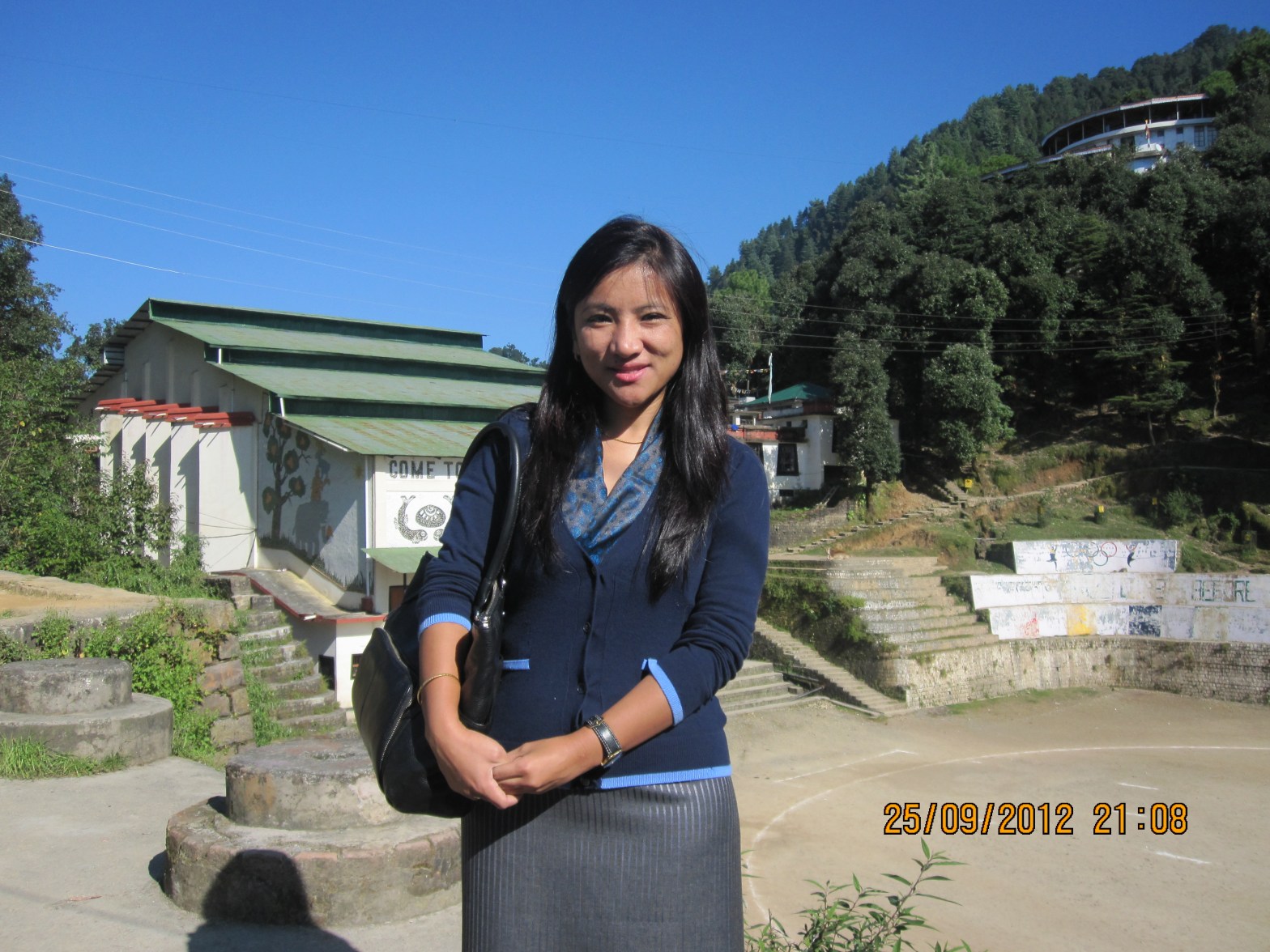
at TCV: during the 2nd Special Meeting of exile Tibetans

Nestled in the Dharamsala hills, overlooking the beautiful Dal lake, I perched on the window sill in the comforts of my family home located right in the heart of Upper TCV School.  As July’s torrential rain overtook the otherwise sunny Sunday morning, I paused to reflect on the ‘whats’ and ‘ifs’ of my life. I pondered what would become of me, if it were not for my parent’s strong association with TCV, and the world around me came to a standstill on this very moment of reflection.

My parents have devoted two-thirds of their lives to this magnanimous institution. Inarguably, I am what I am because of this institution called TCV that has sculpted my life and I will remain indebted to this law of attraction.

This revolutionary institution has grown and branched out rapidly in its 50 years of existence and has unconditionally nurtured the younger Tibetan generations in all frames of life. The valuable emanations from the fine corners of TCV have contributed inexplicably to the education and cultural growth of the Tibetan exile Diaspora.

It astounds me to see how TCV effortlessly and consistently ushers class 12 graduates into the threshold of university life, yet continues to shower its unflinching guidance.  I am at awe with the way TCV extends its healing hand to the poor, the haggard, the underprivileged and the needy.

His Holiness the Dalai Lama’s vision of a modern educational institution that embodies everything virtuous and instils love and care along with the fine seeds of academic learning has come to fruition in TCV and its 17 branches spread across the tentacles of India.

Jetsun Pema la, the soul of TCV had spent a lifetime of altruistic hard-work in building this institution and it is under her leadership and visionary prowess that TCV has nurtured more than 65% of exiled Tibetan children and touched millions of lives. Widely acclaimed as ‘Amala’(‘Mother of Tibet’) and conferred with prestigious awards for her contribution to humanity, she indeed is the crusader of humanity.

TCV today is the heart and the foundation upon which the exiled Tibetans could rebuild their lives.

Sounds cliché, but yes exile is a blessing in disguise and the blessings come to the fore in two ways: His Holiness the Dalai Lama’s global contribution towards universal harmony and TCV’s building of a rock-strong future young Tibet.

Fifty years from now, I can see myself resting in my abode in Tibet, overlooking the ultra swish buildings, with the misty cloud clamping against the incessant rain, while my mind dwells in cogent contemplation on the laurels of TCV and the glories it has brought back home.  I will be beaming with profound pride that I have been a pertinent part of this amazingly beautiful institution that has livened countless lives.

I will always encourage my progeny to hold TCV close to their heart so that they can intrinsically be empowered to stand befitting in the eternal frame of humanity’s most endearing epithet, which is also one of the 21st century’s wondrous wonders.

Autonomy: Scotland and Tibet; Birds of the same feather, daring to fly together

I wrote this piece for the journal Tibet Today in the year 2007 whilst pursuing my graduate studies in Edinburgh

Living in Scotland, I am enamoured by its successful autonomous model. His Holiness the 14th Dalai Lama has admitted to being inspired by the Scotland Model. Imagining Tibet’s autonomy within the similar paradigm, I can only hope for it to be modelled on the Scottish Autonomy.

Thanks to Jenni Campbell (a staff at the Scottish Parliament and an avid supporter of Tibet) for arranging my visit to the Scottish parliament which enabled me the opportunity to witness the debate at the Debating Chambers. It was quite an enthralling experience to see the MSPs from Scotland’s six major political parties getting engaged in heated debates about home issues. I simply couldn’t resist visualising our future Autonomous Tibet in a similar  setting.

The Scottish Parliament has 129 members. Of these, 73 are constituency MSP while 56 are regional “list” MSPs. The Parliament has powers over most of what goes on in Scotland, including education policy, health and transport. The next Scottish Parliament election will take place on the 3rd of May 2007. At the moment, the Labour party and the Liberal Democrats are in coalition and form the Scottish executive while Scottish National Party, Torries Party, Greens Party, Scottish Socialist Party and five independents are the opposition. The magnificent Parliament building definitely deserves to be amidst the new wonders of the world. My eyes turned moist looking at its glaring magnificence. “There shall be a Scottish Parliament”. This was the opening clause of the Scotland Act 1998 which led the following year to the establishment of the first Scottish Parliament since 1707. These are the words inscribed on the plaque of the Mace of the Scottish Parliament, handed to the Parliament by the Queen at the official opening of its first session on 1 July 1999.

Scotland has been extremely supportive towards the Tibetan Government in Exile and to the Tibetan struggle for genuine autonomy, needless to say that the Scottish Parliamentary Cross Party group on Tibet has been instrumental in hosting the ‘4th World Parliamentarian’s Convention on Tibet’ convened at the Scottish Parliament in November 2005.

Chris Balance, the Chairman of Scottish Parliamentary Cross Party group on Tibet and an important member of the Scottish Green Party generously agreed to do an interview with me.  Chris is the Business Manager for the Greens and sits on the Procedures Committee.  The cross party was formed following His Holiness the Dalai Lama`s first visit to the Scottish Parliament in June, 2004.

Q) Scotland’s Autonomy is an inspiration for the future Tibetan Autonomy, What is your say /reflection on this?

C.B; It is very interesting here in the Scottish Parliament where we have a degree of autonomy, following 100 to 200 years of campaign. I can completely understand where the desire for complete independence comes from, but I recognize and support the Dalai Lama`s position as the spiritual and political leader of the Tibetan People. His call for acceptance of autonomy within the Chinese state is what I am very happy to support. His Holiness has visited the Scottish Parliament twice and his part of interest within the Scottish Parliament is with the fact that we have for the first time in 300 years, a Scottish Parliament with a degree of autonomy, we don’t have control over defence and macro economic policy, but we do have control over substantial number of areas relating to health, education, transport, environment. The Scottish Parliament manages to work with the aspiration of Scottish people and their own identity and culture, whilst also working within the framework of the UK government.

Q) What is your general impression about the Tibetan freedom struggle that now sees a clash between quest for genuine autonomy and the demand for complete independence? We have been pitching for autonomy for more than two decades and considering the Chinese government’s apathy and callous attitude, do you see the practicability of a demand for an autonomous Tibet?

C.B; I think, such big achievements always take time. The campaign for Scottish Parliament has been active for atleast 60 to 80 years which is fair enough time. Clearly at the moment we have a Chinese government which is very oppressive of human rights and which in many ways, abuses the human rights of its citizens, not just the Tibetans, but of the other groups within the country. The Chinese government regime, which I believe is much more repressive regime then the UK Westminster regime, does definitely cause difficulty for the Tibetan struggle for autonomy within the Chinese framework. But things always change and we are in a state of flux, the current leadership will move on and a new leadership will be taking over in time and I think one important thing that we can do here in the west is to work with the young Chinese students, who are learning new things and observing our culture. It is important to work with them, to put across human rights and Tibet, because these people who are now in their adolescence will be ruling their country when they are adults. I am an enthusiastic supporter of the non-violent approach; although non-violence doesn’t produce obvious, immediate, quick effects but the problems caused by violent approach can be far worse in the long term and I am not convinced about any form of violent approach that would have the got the Tibetan people any further than what they are at the moment. Thanks to His Holiness, Tibetan people have a profile worldwide which some weaker community would love to have. His Holiness is not just a spiritual leader but principally his role in promoting peace and his peaceful solution and alternatives have given the Tibetan people the profile.

Q) There’s no denying the fact that any country or international body that supports the political profile of Tibet seems to be relentlessly threatened or pressurized by the Chinese Government. How has the Scottish Cross party group on Tibet been containing such threats?

C.B; Oh! The Chinese Consul here (the Chinese Consulate is based in Edinburgh) has been very active. She tried to stop the Cross Party being formed in the first place. The formation of any Cross Party has to be formally been accepted by the Standards Committee and the Consul tried to target the Committee to say no, but I am glad that they refused to oblige to her. When His Holiness visited here, again she wrote to the Scottish Executive, myself, the Presiding officer of the Parliament and to Westminster and again her demands were not met and again His Holiness was able to come here and give a religious address to the whole Parliament and a political address to the members of the Cross Party which was the one thing that the Chinese Consulate was adamant about. She told me that all the trade relations between China and Scotland would end and that all the tourist visits, but we did not see any such consequences. It was all empty threats.

And it did very much demonstrate on a personal level to me the bullying nature of the Chinese government and of the fact that they as much as need us as much as we need them, so we have a power. When I met the other ambassadors and consulates, generally or superficially there is a certain level of politeness. But when I invited the consul to a meeting, she rolled her sleeves and thrashed on the table and said “right down to business, this visit must not happen, you are splittist, separatist….and what you are proposing will cause great damage to the Chinese people”. She came threatening and there was no attempt to any diplomatic courtesy and I felt at the end of the first meeting that if she could behave in this manner with me, whom she has no power over, then the power and the threat of the Chinese government over their people must be truly horrendous and thinking about the Tibetan people, I felt very unpleasant.

Q) Given your concerns about the human rights situation of Tibetans in Tibet under the Chinese occupation and contrasting that with China’s representation of huge economic growth and a display of religious freedom in Tibet, do you think it’s a constructed reality or have things changed for the better?

C.B; Well, we have interacted with former Drapchi political prisoners and clearly, for people held in jails, then are no human rights and that is still deeply disappointing. If the situation is easier for Tibetan people, then I think it is good. I hope that the Chinese government will see this as a part of the solution and see that the Tibetans are happier. But sadly things are state controlled and yes, there is a long way to go. But if China is feeling towards allowing more personal freedom in Tibet, then I think its great and obviously the Chinese government themselves will gain from that. One has to clearly admire the engineering feat in Lhasa, nevertheless the Chinese appear to be making the Tibetans a small minority in Tibet. For me, the Tibetan culture that interests me first is the unique religious culture, which is so precious and important on a global scale that it has to be protected and cherished and it also has to have its own freedom to worship. The Chinese have to realise that it is not a threat and that it is actually a way of life.

Q) His Holiness the Dalai Lama has expressed inspired by the Scottish Autonomy and Parliamentary proceedings. As an MSP and being a key figure in this model, how would you response to this?

C.B; His Holiness has visited the Parliament twice and we have also had a couple of visits by the Tibetan exile parliamentarians. They have taken serious interest in the structure here and how this place interacts with Westminster and in how this Parliament operates. No two countries are the same, so we can’t be exact parallel or model and I think it will be wrong to see it as such. But we have worked together well with Westminster. The people of Scotland have wanted Autonomy for so long, particularly for the last 30 years. It is also said that having the Scottish Parliament has reduced the movement in Scotland for complete independence.

I am speaking here to two audiences, one is the Tibetan and the other is Chinese.  I haven’t seen the Chinese themselves having any particular interest in the Scottish Parliament but I would like to put across the message to the Chinese government that the autonomy here is working.

Q) Well much like the majority of the Tibetans in exile, I too support the demand for a genuine autonomy . Closing on a positive note, how do you envision or foresee the future relations between an autonomous Tibet and an autonomous Scotland?

C.B; We are both small nations living within a bigger framework. Scotland and Scottish people have a reputation for being very open to people from other lands because Scots have gone right across the world and on similar lanes, following the exodus of 1959, Tibetan have taken Tibetan Buddhism right across the world. We understand each other’s situation very well and we will always support the Tibetan people. In future there are a lot of possibilities of economic ties and religious harmony. So I look forward to our future with an autonomous Tibet. His Holiness has said that the next incarnation will not be within China and may be we will have an incarnation in Scotland (laughs).

I interrupted; ‘A Scottish Dalai Lama’?

Image

Born on 7th July, 1952, Chris Balance is an alumnus of St. Andrews University (not to forget that Prince William is an alumni of this prestigious university). His Career graph reflects the multi-talented role that he donned as a self-employed playwright, writer and bookshop owner, as a part-time teacher in creative writing at Crichton Campus, Glasgow University and as the Manager of the mental health Charity, Glasgow which is the 2nd largest city in Scotland.  Chris also has a professional membership in Executive Member of Writers` Guild of Great Britain and Scottish Society of Playwrights Equity.

Well it has been quite an experience living and studying in an autonomous Scotland and being able to interview a member of the Scottish Parliament. In twenty years down the lane, I see myself conducting a similar interview with a Tibetan Parliamentarian in an autonomous Tibet.  I bet this is a sight with a vision for I strongly believe that sight without vision is incomplete!

“Shoot for the moon. Even if you miss it you will land among the stars”-Les Brown.